The open classrooms for drawing and printmaking, organised by the cultural association Prima Littera and the Ripense Printmakers Association, are currently on display until 13 November at the Maruja Mallo room of the Federico García Lorca cultural centre in Rivas-Vaciamadrid.
The concept of an open classroom refers to a collective creative space where artists from both disciplines—drawing and printmaking—gather. The cultural centre provides two classrooms weekly through the Department of Culture.
Drawing between parentheses
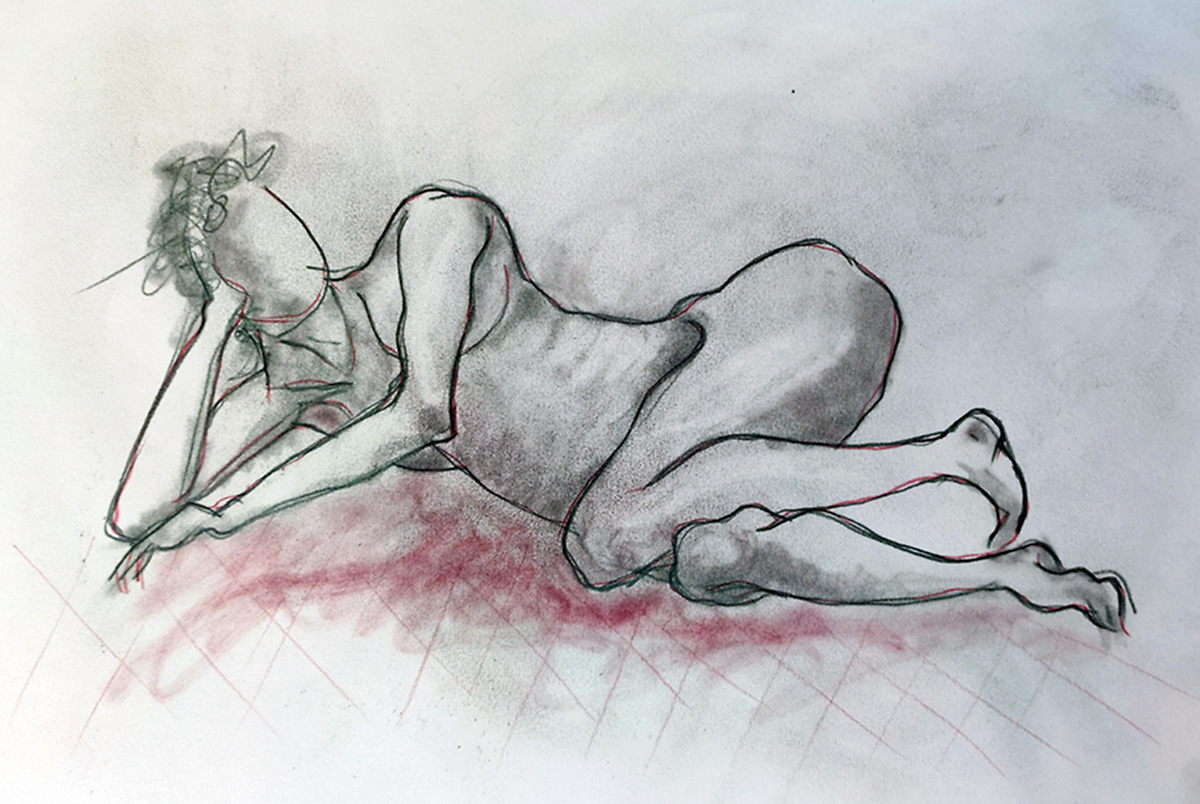
The open classroom for drawing with models, promoted by the Prima Littera association, has been meeting every Friday afternoon for nearly 30 years. Participants gather in a designated space at the Federico García Lorca cultural centre, provided by the Department of Culture.
During these sessions, professional models pose for periods ranging from two to ten minutes. This method allows artists to identify their strengths and weaknesses as they observe, analyse, assimilate, and draw the human body. The aim is to cultivate spontaneity, appreciate the freshness of the stroke, and liberate each sketch from often clichéd standards. The resulting drawings, created during these Friday sessions amidst everyday life, form the basis of the exhibition titled 'Drawing between parentheses'.
The bestiary and still life
The open classroom for printmaking, organised by the Ripense Printmakers Association, also collaborates with the local council to utilise creative space in the cultural centre. This year, the exhibition focuses on two classic themes from art history: the bestiary and still life.
The bestiary gained popularity in the Middle Ages through illustrated books describing both real animals, such as lions and elephants, and mythical creatures like griffins and dragons. These images often carried moral and allegorical messages intended to educate, instil fear, or provoke reflection, embodying abstract concepts such as good and evil. The monsters represented human contradictions, evoking both repulsion and fascination, fear and desire. In this exhibition, participants have revisited these concepts in a contemporary context, presenting works such as 'Hominotaurinus', 'Fakenewsaurio', and the series 'Gambito', which convey political or social commentary. Modern mythical beings like Ultron also emerge from their imagination.
Still life has ancient roots but became particularly popular in the 17th century. Traditionally, it involves the arrangement of various objects, often conveying a message about the transience of life and material possessions. The still life works from the printmaking workshop differ in that they are three-dimensional, featuring a common element and realised through diverse techniques that incorporate various materials and effects, giving physical form to the artistic object.