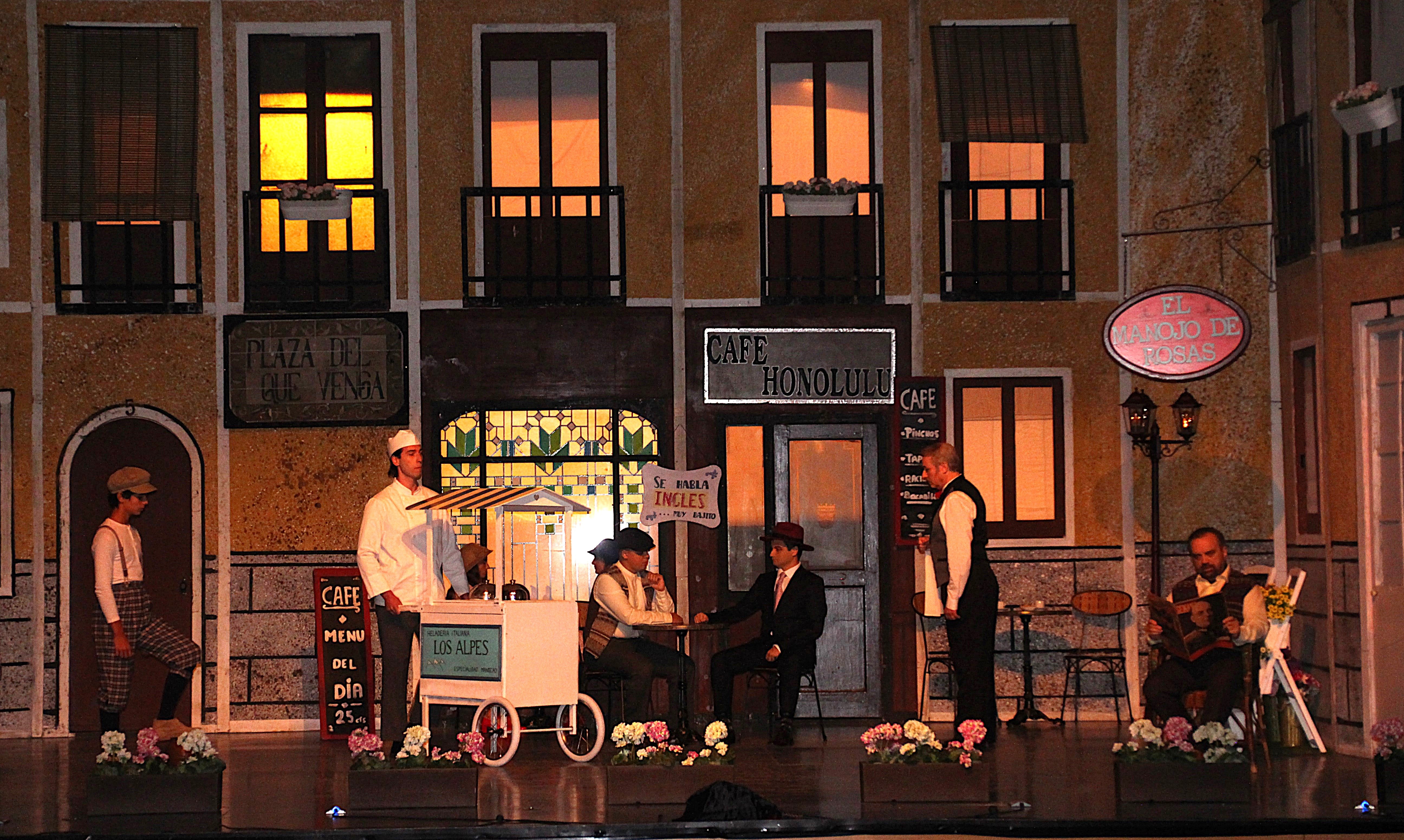
The Teatro Tomás Barrera embraced zarzuela once again with a performance of La del manojo de rosas, the popular lyrical farce by Pablo Sorozábal, presented by DRAO Producciones during the 43rd National Zarzuela Week. Directed by Luis Roquero, the professional company held two performances, with a full house in the afternoon session and nearly full attendance in the evening.
The event drew spectators from various regions, including groups and associations from Tembleque, Membrilla, Churriana de la Vega (Granada), Cózar, Madrid, and Toledo, all enjoying one of the most recognised scores by the Basque composer, which pays homage to traditional Madrid.
First premiered in Madrid in 1934, the work combines Madrid's customs, romantic entanglements, and a diverse musical score featuring pasodobles, chotis, habaneras, farrucas, and comedic numbers. The narrative revolves around social differences, appearances, and the desire for free love.
The musical and dramatic focus is on Ascensión, an independent florist portrayed by Gemma Soler, whose soprano performance reaches a poignant peak in the famous aria No corté más que una rosa. This melody, anticipated by Sorozábal from the instrumental introduction, encapsulates the sensitivity of a woman defending her feelings against societal prejudices.
Alongside her, Fran García plays Joaquín, the mechanic in love with Ascensión, a baritone role that features one of the most recognisable numbers in the work, Madrileña bonita. Their relationship unfolds through the pasodoble Hace tiempo que vengo al taller and the habanera Qué tiempos aquellos, adding different shades to their love story.
The third emotional pillar is Ricardo, the aviator portrayed by Eduardo Pomares, whose tenor part culminates in the chotis ¿Quién es usted?, one of the most lively and traditional scenes in the zarzuela. The comedic aspect is represented by Clarita and Capó, played by Andrea de Cubas and Alberto Porcell, whose duets, from the foxtrot Si tú sales a Rosales to the humorous farruca Chinchilla de mi charniqué, lighten the central conflict.
David Sentinella takes on the role of Espasa, the pretentious waiter, while the seasoned baritone-bass Jesús Lumbreras appears as Don Daniel, and José Antonio Sayagués plays Pedro Botero. Lumbreras acknowledged to local radio station Radio Horizonte that he approaches this supporting role with the same dedication as any lead character, emphasising the importance of giving one's all on stage.
Regarding DRAO Producciones' staging, Lumbreras highlighted its traditional aesthetic, fully set in the 1930s, with a novel twist related to the origins of cinema. “From the beginning of the piece, it will seem like we are filming a movie within the theatre,” he noted, a proposal that serves as an introduction to the story.
With a long career behind him, Lumbreras expressed pride in his journey from performing with amateur singers and the maestro Torres. “Fortunately, at my age, I still get to work and sing, which is what I love most in life.” However, he warned of the economic challenges faced by private companies in sustaining zarzuela productions due to the costs of orchestras, choirs, and casts. “The major issue is the lack of public support for the genre,” he stated, comparing the resources available to large productions at the Teatro de la Zarzuela with those of companies operating on tighter budgets.
Lumbreras is well acquainted with La Solana, having performed there numerous times in productions such as La leyenda del beso, Luisa Fernanda, and Los gavilanes. He believes that the National Zarzuela Week has positively evolved, especially since it began to welcome different companies, enriching the festival with diverse artistic directions and interpretations of the genre. He also highlighted the town's connection to zarzuela through Federico Romero and Guillermo Fernández-Shaw, creators of some of the most famous works, including La rosa del azafrán. He concluded by congratulating the community for keeping this tradition alive for over four decades, stating, “It is incredible that you have maintained this for 43 years; it is commendable.”
DRAO returned to the Zarzuela Week following successful performances in La Solana in recent years, including major zarzuela works like Katiuska (2022), La tabernera del puerto (2023), and El barberillo de Lavapiés (2025), as well as smaller genre pieces like La revoltosa (2024).