The Massarrojos municipal cemetery, inaugurated in 1926, is celebrating its centenary by honouring the memory of those who have passed away and accommodating traditional Valencian rituals surrounding death.
On 31 March 1926, the Permanent Commission of the Valencia City Council agreed to purchase land from José María Belenguer for the construction of the cemetery at a cost of 3,250 pesetas. To provide context, a ticket to watch a Valencia FC match against Racing Club de Madrid at the Mestalla stadium cost just 1.50 pesetas at that time.
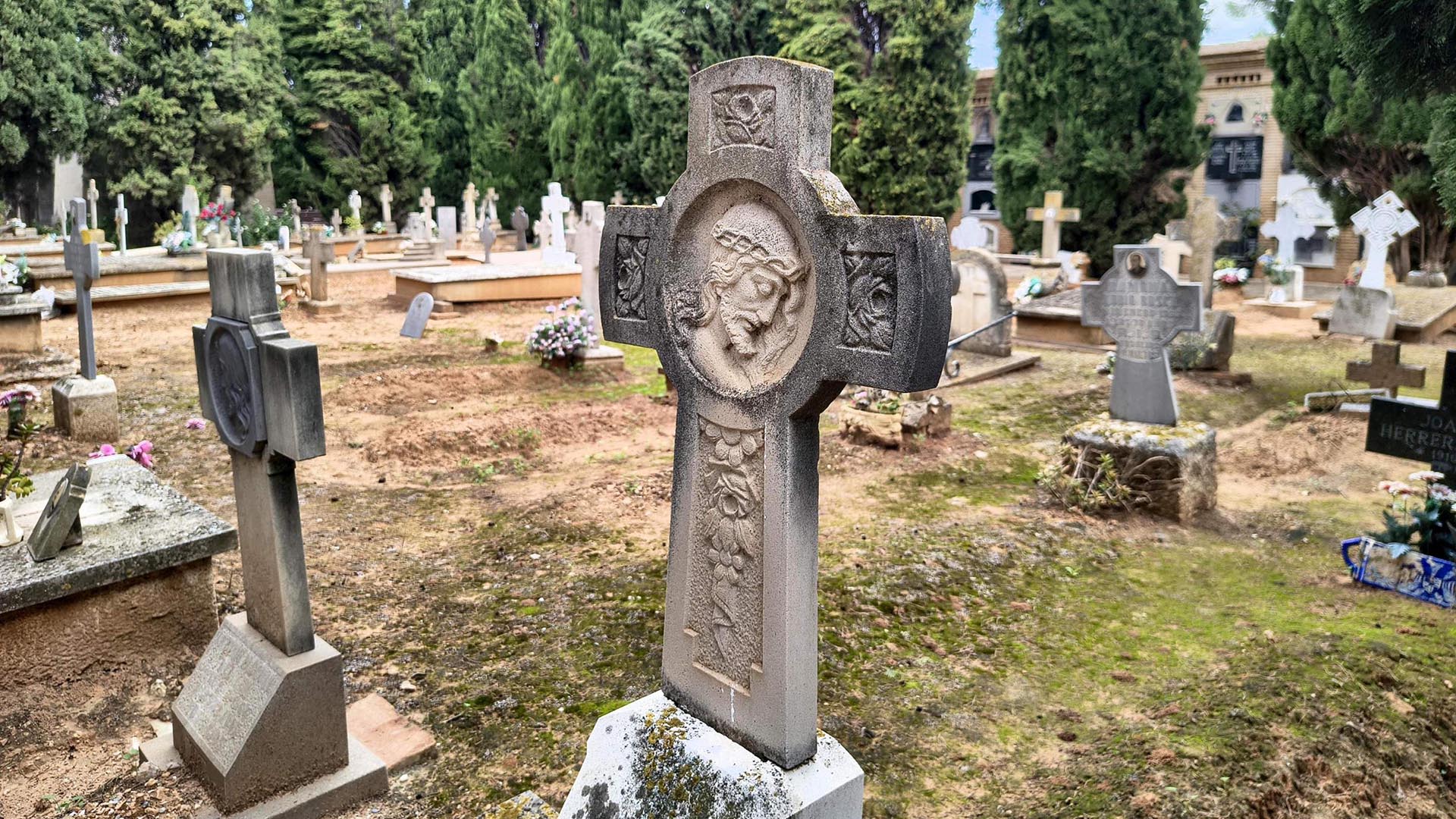
Recognised as a Local Relevance Asset (Bien de Relevancia Local), the cemetery is noted for its ethnological significance, where life and death coexist beneath the shade of cypress trees. The municipal documentation describes the cemetery as a rectangular parallelogram, elongated in the direction of its façade, surrounded by niches with a central axis featuring several beautiful mausoleums, leaving fields of graves behind them on either side.
Access to this century-old site in the Pobles del Nord area is through a slightly angled entrance. Adjacent to the entrance are the chapel and the mortuary. A sign at the top indicates the cemetery's opening date: “Inaugurated on 31 May 1926, during the mayoralty of Luis Oliag Miranda and the presidency of Luis Miralles Pelecha.”
The mausoleums of the Senent and Castellano families, as well as those of some victims of the Spanish Civil War, are constructed from limestone, leading to earth burials and a trail of black and white tombstones in the niches. Among them lies the grave of Nicolau Primitiu Gómez Serrano, an esteemed Valencian scholar, alongside his wife Maria Antonia Senent Ibáñez and their children, located just an hour and a half on foot from his vast bibliographic legacy housed in the former Monastery of Sant Miquel dels Reis, now the Biblioteca Valenciana Nicolau Primitiu.
As societal needs evolve, cemeteries like Massarrojos are adapting by constructing columbariums, smaller spaces for storing urns with ashes. However, many residents of Valencia still prefer traditional burials over cremations. The customs of wrapping the deceased in the habit of a nearby congregation from Godella or Montcada have largely faded.
A stroll through the Massarrojos cemetery reveals common surnames in the area, such as Doménech, Senent, Bosch, Ibáñez, and Alandes. Domingo Delgado Tejedor, the first gravedigger appointed by the Valencia City Council on 11 October 1926, accompanied many of them in their final farewells. The community remembers the transfer of bodies from the old cemetery to the new one, possibly captured in silent 35mm film.
Visiting the Massarrojos cemetery is free during designated hours, but temporary stays incur a modest fee. According to the municipal ordinance regulating funeral service fees, the initial cost for a simple niche for five years is €158.14, with the same fee applicable for each subsequent renewal. For a temporary accommodation of 50 years, the initial fee and renewals amount to €950.07. A crypt accommodating three bodies for a maximum of 50 years costs around €12,000, but this option is only available in specific sections of the General Cemetery and Campanar.
As in other municipal cemeteries, a ceramic panel made in Manises featuring the blue figure of the Mare de Déu del Desemparats bids farewell to visitors with the inscription: “Mare dels Desamparats, jamai ens desampareu ni en la vida ni en la mort ni en lo Tribunal de Déu.”