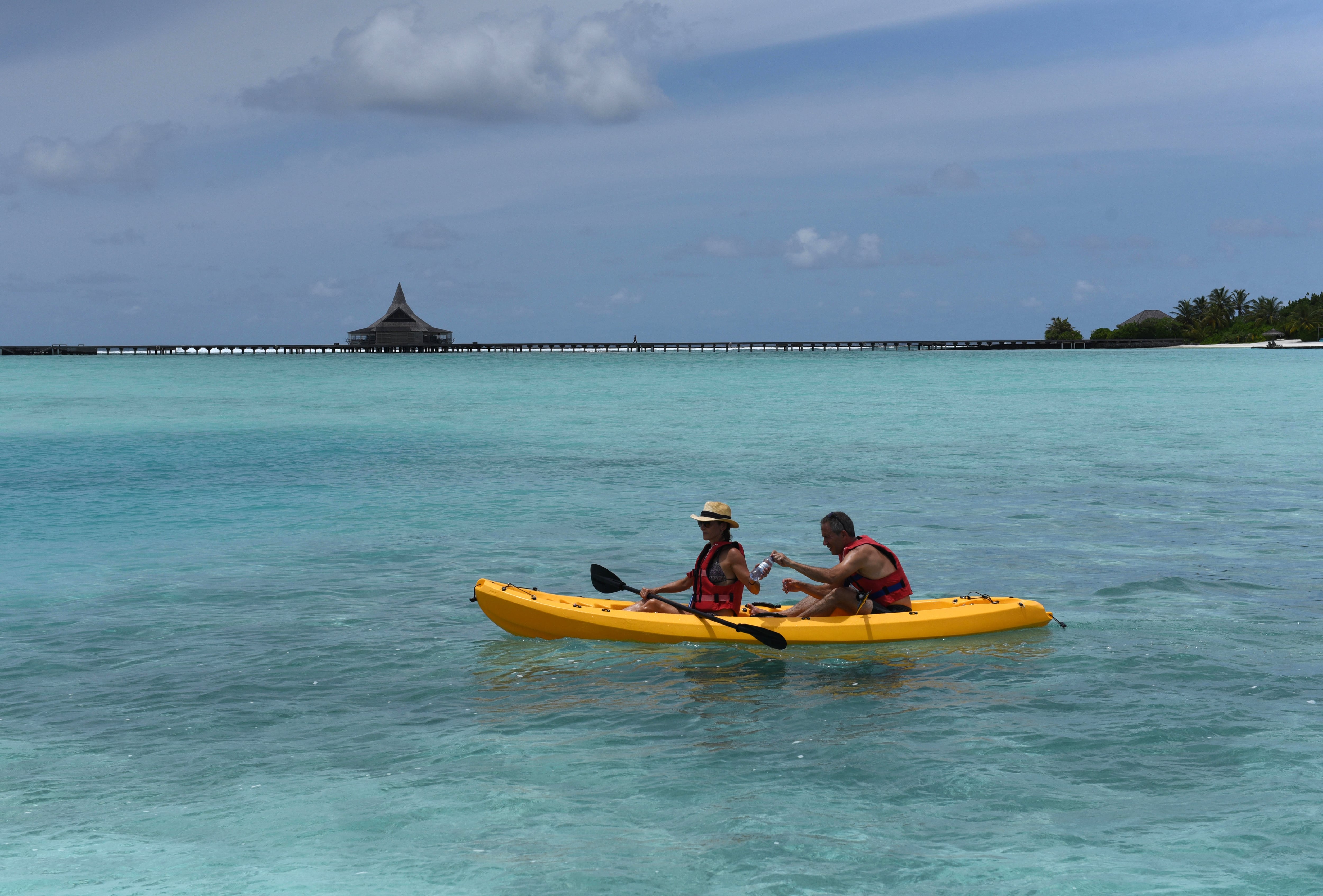
Maldives: average altitude 1.5 metres
Some countries boast their mountains as national monuments. Nepal has Everest, Tanzania has Kilimanjaro, Japan has Fuji, and Argentina has Aconcagua. These giants dominate the skyline, attract travellers, and often become symbols of national identity. But what about countries without mountains?
The Maldives is perhaps the most extreme example of a country devoid of mountains. Its nearly 1,200 coral islands, grouped into 26 natural atolls, barely rise above the turquoise waters of the Indian Ocean. Here, there are no hills, valleys, or cliffs—only narrow strips of white sand, coconut palms, and lagoons that appear to be painted with watercolours.
In the Maldives, mountains are, paradoxically, underwater: they are the submerged volcanic structures upon which the coral atolls have formed. The country's average altitude hovers around 1.5 metres above sea level, with its highest natural point, on Villingili Island in the Addu Atoll, reaching just 2.4 metres according to traditional geographical references. This figure makes the Maldives one of the most vulnerable countries to rising sea levels.
However, this minimal geography conceals an extraordinary universe. The coral reefs, manta rays, whale sharks, and underwater landscapes make diving one of the country's premier experiences. Beyond the tourist resorts, inhabited islands like Maafushi and Dhigurah offer a glimpse into the daily lives of Maldivian communities. In Malé, one of the world's most densely populated capitals, one can discover just how precious space is.