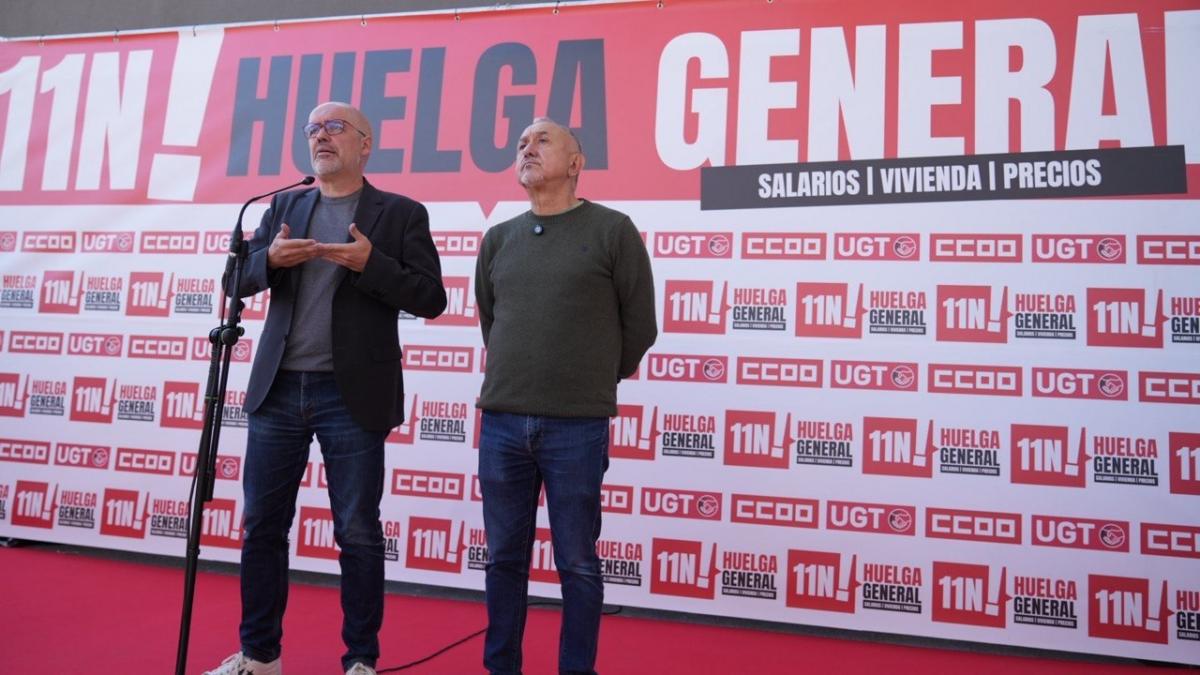
The secretaries general of the trade unions CCOO (Comisiones Obreras) and UGT (Unión General de Trabajadores), Unai Sordo and Pepe Álvarez, have expressed their approval of the proposed 5.3% increase in the minimum wage (Salario Mínimo Interprofesional, SMI) for 2027, as outlined in a draft royal decree presented by the Ministry of Labour and Social Economy.
This increase would raise the SMI to €1,286 per month over fourteen payments, equating to €42.87 per day and an annual total of €18,004, which is €910 more than in 2026. This adjustment continues the government's wage policy of recent years and is seen as a significant boost for the lowest earners, who have seen their minimum wage rise by nearly 75% since 2018, when it was €735.90.
Both unions highlight that this wage increase has coincided with job creation and has played a crucial role in reducing working poverty and the gender pay gap, as minimum wage earners are predominantly women, young people, and workers in precarious sectors.
Demands for full implementation
CCOO and UGT stress the importance of ensuring that the entire wage increase is reflected in net pay. They call for amendments to the Income Tax Law (Ley del IRPF) to guarantee that the minimum wage increase is not diminished by fiscal measures. The unions argue that it is unacceptable for workers to lose part of their wage increase due to tax issues and that stable regulations are necessary to prevent excessive tax rates for minimum wage earners and those earning slightly above.
Furthermore, they urge the government to fulfil commitments made in the minimum wage agreement signed on 29 January and to approve regulations regarding compensation and absorption. The current draft retains a rule from 2020 that allows companies to offset the minimum wage increase with other payments, such as bonuses for seniority or night shifts, which can result in many workers not seeing the wage rise reflected in their pay.
Call for regulatory changes
The unions demand that the new regulations explicitly exclude personal and job-related bonuses from compensation and absorption calculations, ensuring that the minimum wage increase is added to the base salary. They also call for the approval of a royal decree on workday registration, which has been pending for months. A reliable and accessible digital register is deemed essential to combat unpaid overtime and fraud in part-time contracts, which undermine the effectiveness of the minimum wage.
CCOO and UGT insist that these commitments must be met alongside the approval of the minimum wage decree for 2027, ideally before its implementation on 1 January. They assert that while raising the minimum wage is necessary, it is not sufficient unless it is ensured that the increase is fully realised in workers' pay, free from deductions and compensations.