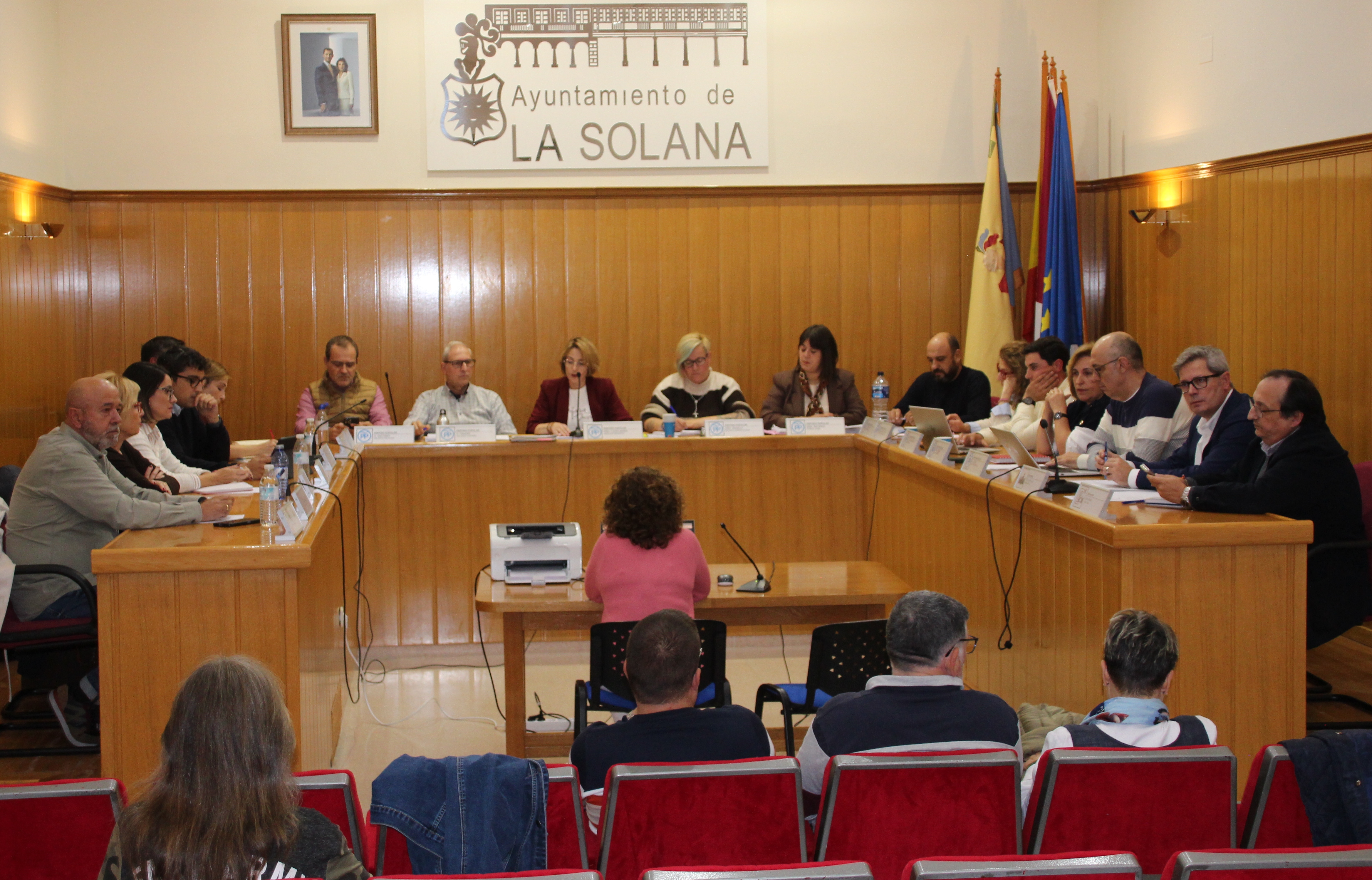
The municipal council of La Solana has unanimously approved a new ordinance regulating neighbourhood festivals and the temporary occupation of public spaces for festive activities. This decision was the highlight of the council meeting held on Wednesday, during which the members of the electoral tables for the elections scheduled on 29 November were also drawn.
The draw generated significant interest, as is customary, although the names of those selected were not announced publicly. Instead, the chosen individuals will receive notifications at their homes in the coming days.
Regarding the ordinance, Santiago López, the councillor for Economic Promotion, stated that it addresses a real need to provide legal security for neighbourhood festivals and to support local brotherhoods. The aim is to facilitate events organised by neighbourhood associations and non-profit entities by establishing a common municipal procedure that ensures safety, coexistence, and proper use of public spaces.
While the opposition voted in favour of the ordinance, they noted that it was not a priority issue, as no proposals had been presented during the legislative term. Eulalio Díaz-Cano reminded the council that existing regulations were governed by regional laws. The mayor emphasised the necessity of regulating this matter, as previous decrees had not been issued, and expressed her desire to protect and enhance neighbourhood festivals. Following the debate, the ordinance was approved unanimously.
Subsequently, a public draw was conducted to appoint members of the electoral tables using a computer platform provided by the electoral census, which is managed by the National Statistics Institute (INE). A total of 207 individuals, including both principal and substitute members, were randomly selected for the 23 electoral tables in the municipality. Each table will have nine members: one president, two vocal members, and two substitutes for each of the three roles. In compliance with data protection laws, the names of the selected individuals were not disclosed, but they will be informed at their respective addresses.
Another matter discussed and unanimously approved was the request from the Santa Catalina Cooperative for a reduction in the Construction, Installation, and Works Tax (ICIO). The council recognised that the ongoing works by the winery are of special municipal interest, contributing to facility expansion and job creation. They clarified that this process does not constitute a subsidy but a justified tax reduction, amounting to just over €2,000, which corresponds to 60% of the reduction.
During the session, the mayor highlighted various resolutions issued by the mayor's office, including infrastructure works, network renewals, allocation of municipal plots, and advancements in electrical installations. She underscored the increase in control procedures and expenditure oversight. Some concerns were raised, particularly regarding legal services to defend the council in judicial proceedings. Additionally, new measures to prevent flooding and address runoff issues in certain areas of the town were discussed.
The council also announced payment orders amounting to €750,000 for various invoices since the previous meeting. In the section for questions and requests, the opposition inquired about the climate control in local schools. Currently, only two schools have been equipped with climate control, with the Javier Paulino school set to follow. Antonio Valiente, the councillor for Education, explained that some schools are older and that urgent areas will be assessed for adaptation. The goal is to ensure all schools are climate-controlled in the coming years.
The PSOE party also questioned the closure of the Zarzuela Museum during the lyrical festival, to which it was responded that work is ongoing for the future Ethnographic Museum located in the same building. Other topics included improving conditions for the Local Police through a bonus system, which will also apply to other municipal workers, as indicated by the governing team. The opposition requested information on the tendering of street cleaning services, road repairs, and the costs associated with the Santiago and Santa Ana fair. In this regard, Ángela Notario, the councillor for Culture, reported that the total budget for the festivals was €113,624, detailing each expense.
The session began with remarks from the mayor in memory of the victims of the train accident in Urda. The mayor also acknowledged local footballers Iván Romero and Alberto Ruiz for their personal and collective achievements. In the first round of opposition speeches, Eulalio Díaz-Cano made additional remarks, also recognising athlete Paula Sevilla, who will receive an accolade from the Designation of Origin La Mancha. All councillors participated in the meeting except for the socialist Pablo Navas, which lasted for two hours.